← All projects PROJECT P-04 / 06

Mechanical Design · Robotics · CAD · Prototyping

Autonomous Mobile Robot (AMR)

A warehouse robot that autonomously followed routes, detected storage locations, lifted crates, and transported them without human intervention.

Organization
Northeastern University, Cornerstone Engineering
DateSpring 2025 · Academic Project
RoleMechanical Design & Lifting-System Development
Core SkillsFusion 360 · Arduino · 3D Printing · Robotics
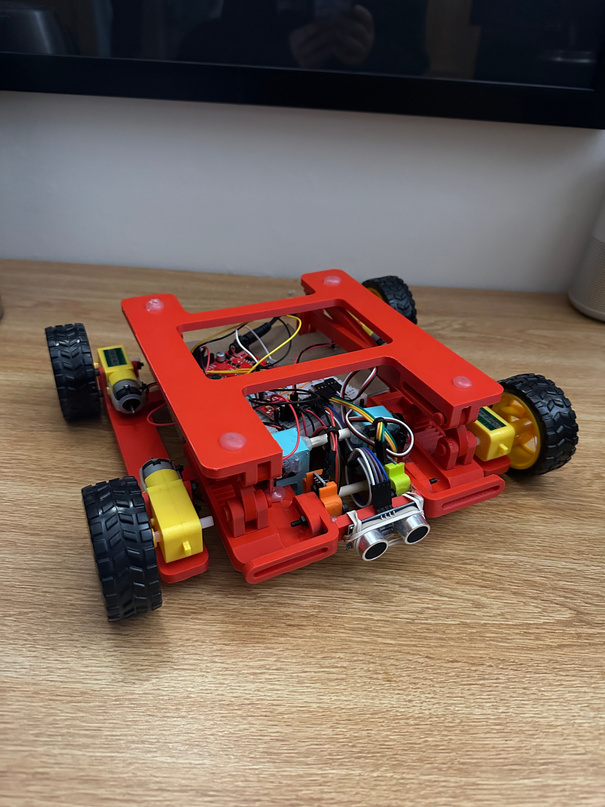
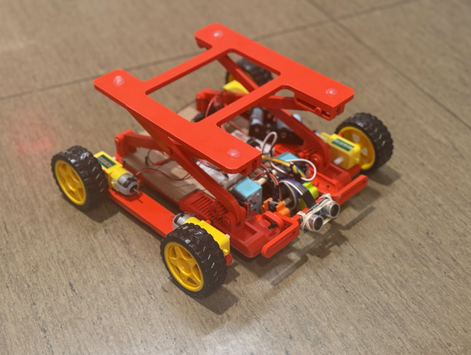
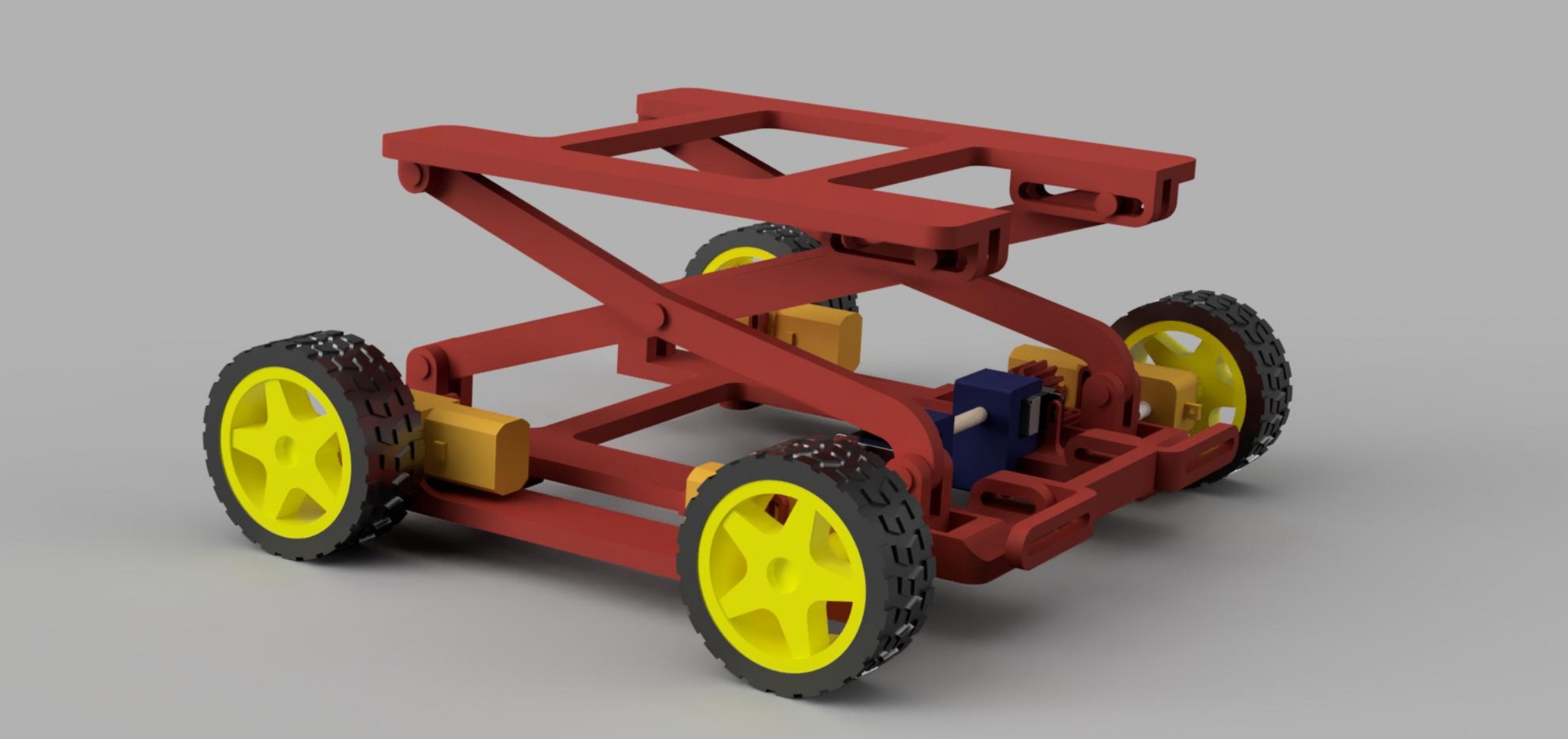
Render of the autonomous mobile robot with its scissor liftClick to enlarge
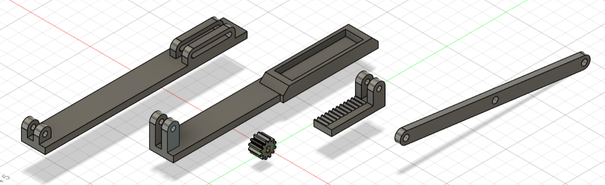
Fusion 360 render of the robot chassis and rack-and-pinion scissor lift.
ControlAutonomousLine tracking and obstacle sensing
Fabrication3D PrintedIterative mechanical components
SystemsIntegratedMechanical, electrical, and software systems

Project Overview

A complete autonomous material-handling prototype.

As part of Northeastern University’s Cornerstone Engineering program, my team designed and built an Autonomous Mobile Robot capable of navigating a warehouse environment, detecting storage locations, lifting crates, and transporting them to their destination without human intervention.

The project required us to combine mechanical design, electronics, programming, and manufacturing into a functional prototype while working within strict time and budget constraints.
Mechanical Design

Developing the scissor-lift system.

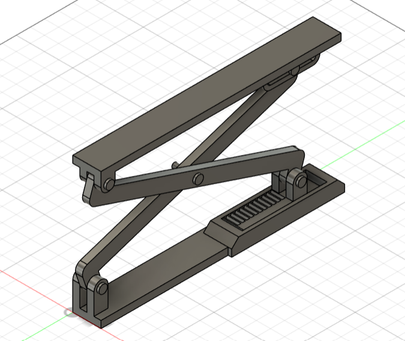
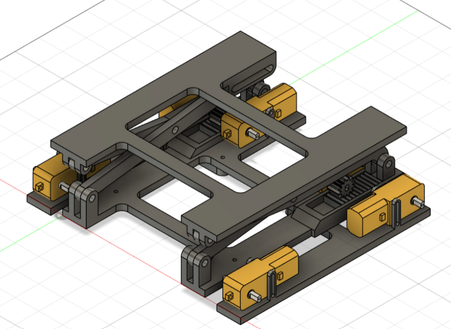
My primary responsibility focused on the robot’s mechanical design and lifting system. I designed and modeled components in Autodesk Fusion 360 and helped develop a rack-and-pinion-driven scissor lift capable of raising and lowering crates while maintaining stability.

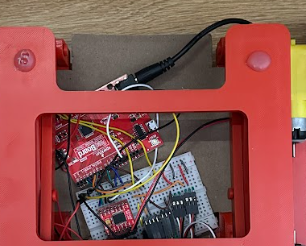
Multiple design iterations were evaluated to improve strength, reduce friction, increase lifting performance, and simplify assembly. Components were 3D printed before being integrated with Arduino electronics, motors, sensors, and custom hardware.

Iteration

Testing exposed what CAD could not.

Early prototypes revealed issues with component clearances, servo placement, structural rigidity, and friction within the lift mechanism. We repeatedly modified the CAD models, printed updated components, tested performance, and refined the system until the robot consistently completed its tasks.

Testing also led us to redesign portions of the warehouse layout and shelving to improve navigation and sensor reliability.

Final System

Mechanical and electrical systems working together.

The final robot integrated a scissor lift, line-following sensors, ultrasonic distance sensing, and an Arduino-controlled drivetrain into a single autonomous platform.

The project strengthened my understanding of mechanical design, rapid prototyping, interdisciplinary integration, and continuous improvement throughout product development.